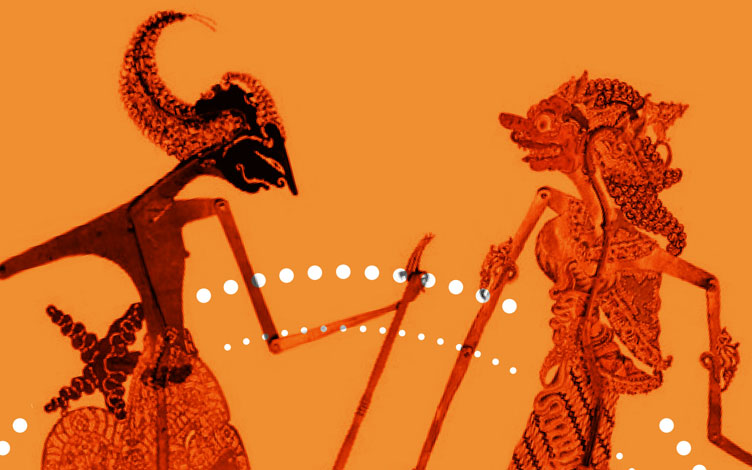
Sri Setia Pulau Singa on their aspirations for the art form

Published: 24 May 2022

Time taken : <5mins

Wayang kulit is a well-recognised and established art form in Southeast Asia. Even as its popularity has fluctuated over the years, it still maintains a strong presence in the region. It's no different in Singapore, which once had regular wayang kulit troupes performing across the island throughout the British colonial period all the way to the ‘70s. Presently, the Javanese form of wayang kulit—also known as wayang purwa—is the most well-known in Singapore, having been advocated for and performed by Sri Warisan Performing Arts for many years.
However, a bit closer to home, there is wayang kulit Kelantan, a form of shadow puppet theatre that emerged from the Northeast Malaysian state. While most forms of wayang kulit tell stories from Hindu epics such as the Ramayana and Mahabharata, there are distinct differences between each style. Kelantanese wayang kulit in particular is known for brightly-coloured puppets, which show through the screens where the shadows are cast.
In Singapore, Sri Setia Pulau Singa is the only group that practices Kelantanese wayang kulit. They are also the only group to make their own puppets.
The group began some 10 years ago in 2012, with a pioneering batch of 12 individuals. One of the group’s founders and performers, Nurfaizal (Faizal) bin Ja’afar, shared that he and his fellow performers became interested in Kelantanese wayang kulit through the music form, dikir barat. Both forms share the use of instruments such as the serunai and percussion drums such as the gendang.
“In 2006, I started going to Kelantan to repair my drums and eventually met a very well-known tok dalang (storyteller/puppeteer) known as Pak Soh. After that, I went back every two years and eventually brought along Azam (a friend and fellow performer) as well. We became his students and roped in 10 other people, and so began the group.” Faizal and Azam also reveal that the group was named after the troupe led by their late teacher's mentor, with the blessing of the mentor's son. "Pulau Singa" (which translates literally to ‘lion island’) was affixed to give the group its own unique identity.


Images from trips to Kelantan undertaken by members of Sri Setia Pulau Singa.
“
It’s only right that a dalang can make his own puppets.
”
When the Sri Setia group first began performing, they received a substantial number of puppets from their counterparts in Kelantan. While it was perfectly fine and sometimes necessary to use different puppets to represent various characters, there was still a limitation. The group wanted to stage stories from Singapore and knew that they needed to make their own puppets specific to the folktales and legends they wanted to tell.
“I planned it out step-by-step,” explains Faizal. “I decided to spend a few years on each aspect of performance. I first focused on the performance itself, such as music and dialogue. It was only in 2017 that I started to focus on creating my own puppets. It’s only right that a dalang can make his own puppets.”

Faizal demonstrating with one of the troupe's puppets.
The group went through many trials and errors in figuring out the process to create their puppets. Faizal notes that after getting a feel of the tools and methods used to create the puppets, the actual craft is manageable. “The difficult part is actually designing and drawing of the puppet,” says Faizal. “There’s no template, no technology, you have to create a new drawing every time you want to produce a puppet. There’s no archive to pass to the next generation.”
The group now leverages on technology and their own skills, using software like Adobe Photoshop to convert existing puppets into templates and to create brand new ones as well. Faizal first experimented with using paper and even plastic, before realising that the traditional use of animal hide was still the best way to create the puppets. Now, the group uses a mix of cow and goat hide, the former used for larger and more active puppets while the latter is used for smaller puppets as well as scenery pieces.
1. Create a sketch of the puppet you want to carve, either digitally or by hand. Once you have this, stick the drawing or template onto the goat hide.
2. Punch holes of varying sizes to define the character’s features, especially the face and body. Use a wooden block or cutting mat as a base beneath the hide.
3. Colour the hide using water-based paint or markers from lightest to darkest. Water-based paint allows light to pass through so the colour of the puppets is visible on screen.
4. Mount the puppet on a wooden handle in the centre, and assemble the moving limb (most wayang kulit puppets have only one arm). Create joints by knotting strips of hide using an overhand knot.
5. Lacquer the hide to harden the puppet and to preserve the colours.
At present, the group’s library mostly comprises pre-existing puppets, with a repertoire that is fairly traditional. However, they do try to tell different stories, using these puppets to represent various characters. Creating their own puppets is immensely important to Faizal, Azam and the whole troupe. They hope to have a substantial library of puppets of their own in the decades to come.
“We asked ourselves, in the years to come, who will still be interested in epics such as the Ramayana? What about our own stories?” says Azam. The group is thus focused on staging productions based on accessible local literature that mass audiences would recognise, and hope to eventually move towards more historical texts once this sense of appreciation among audiences has been cultivated. For Pesta Raya – Malay Festival of Arts 2022, the group is presenting a familiar story, Singapura Dilanggar Todak (The Garfish Attack on Singapore).
“There is an undeniable sense of satisfaction in producing your own puppets and having them be appreciated by audiences,” Faizal adds. “But what’s more important is that we wanted to showcase Singaporean stories, to have a kind of wayang kulit that is truly our own.”
Sri Setia Pulau Singa performed at Esplanade on 29 May 2022 at the Esplanade Concourse.